how to write banger tweets
last updated 19th feb 2026
i've been writing on x for a while now.
last month, one of my articles was #3 most read in the world. and i've written content for at least one of your favt. x profiles. you've probably read something i wrote without knowing it was me.
i've spent years studying what makes content spread. and i've figured out that virality isn't luck — it's an engineering problem. every banger follows the same formula, and once you see it, you can't unsee it.
this is everything i know.
x's algorithm exists to keep people on the app longer. if your content captures attention, holds it, and makes people share — x will push it to as many people as possible.
you're not fighting the algorithm. you're working with it.
every viral tweet follows the same formula:
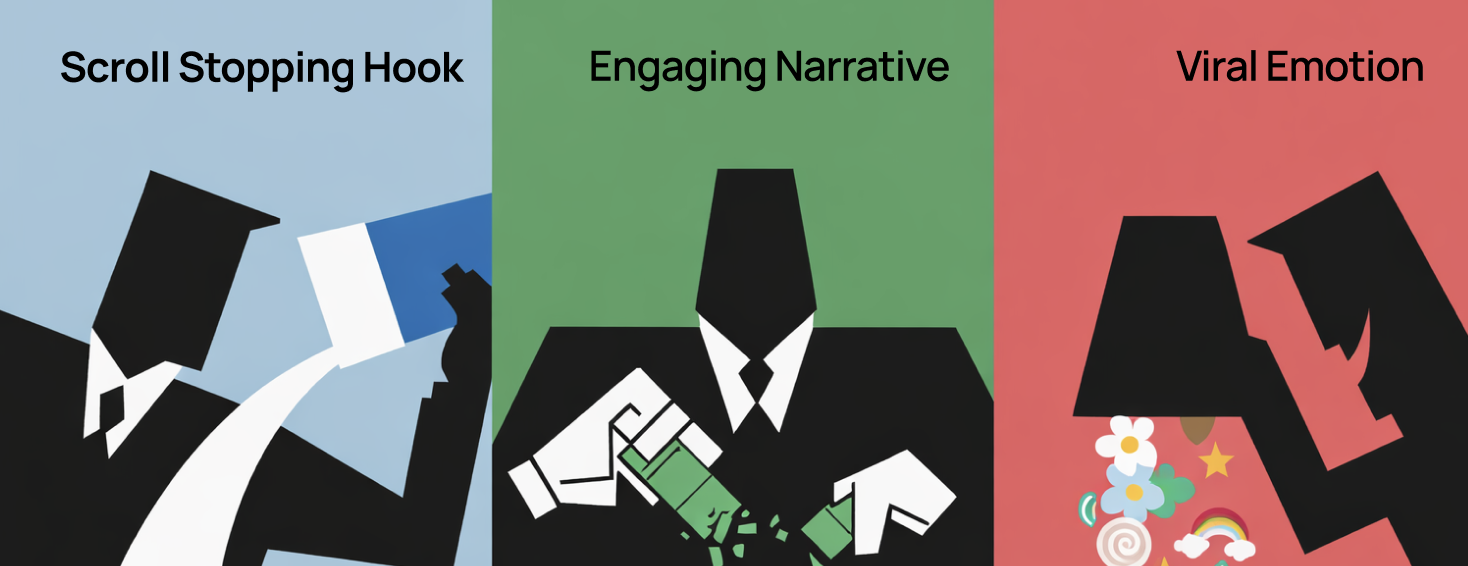
nail all three and you have something people can't scroll past
01
the hook — where 80% of your impact lives
here's how someone actually scrolls through their x feed. eye-tracking heatmaps show the same pattern every time — they see the image first. then their eyes move to the hook text. if the hook is interesting, they open it. if not, they keep scrolling — in under half a second.
the image and the hook are a single unit. they work together to stop the scroll. get both right, and the rest of the thread almost doesn't matter.
same exact content with a better hook took one thread from 63 retweets → 1,100 retweets. the difference was just 4% more clicks. tiny gap. massive outcome.
less than 3% of people will click past your first line. your only job is to get that number higher.
leverage authority & credibility
don't say “a negotiation tactic you can use.” say “steve jobs used this $1 trick to sell 40 million ipads.” you're borrowing the weight of a known name to make a common concept sound like a game-changing secret. that thread got 3,500 rts in 48 hours.
use specific numbers & bold claims
“20 cool concepts i learnt as a founder” is lazy. “18 startup mental models that helped me sell my startup to a $50B company” is killer. odd specific numbers feel real. round numbers feel made up.
promise personal stakes
“here's what it means for YOUR health” turns a random fact into something the reader cares about personally. make them the protagonist. when the stakes feel personal, clicking becomes involuntary.
create a curiosity gap
hint at something surprising without revealing the answer. force readers to click to close the loop. the best hooks don't answer anything — they just make it impossible not to ask the question.
make your image do the work
images are processed faster than text — the heatmap doesn't lie. a striking thumbnail stops the scroll before your words even register. one well-chosen image can drive nearly 5x the average CTR.
i was writing a thread on amazon's shareholder letter. instead of using a screenshot of the letter or a photo of jeff bezos, i got the entire letter printed out. spread the pages on a table. highlighted a few lines with a marker. took a photo of it and posted that as my cover image.
people stopped scrolling because it looked real and physical. you could feel the weight of it. they saw the image first, then read the hook. that combination is unstoppable. don't just find an image — create one that's impossible to ignore.
the ritual
rewrite your hook 20 times. not 3, not 5 — twenty. when you “kinda” like one, that's your winner. this is the single most important habit you can build.
02
the narrative — why people stay
the hook is the cover of the book. the narrative is why they keep reading. the way you tell a story is 100x more important than the moral of the story.
wrap lists inside a story
someone posted a plain list of useful startup tools — 23 retweets. same tools reframed as “how to kickstart your startup in 15 days” with a step-by-step breakdown got 1,800 rts and 8,200 likes in 24 hours. content was 95% the same. narrative made it feel 10x more valuable.
make the reader go on a journey
don't present information. create a progression. show a timeline. build toward a conclusion. the best threads read like a documentary, not a textbook. escalate.
use unexpected angles
shaan puri's thread on why clubhouse would fail got 5,000+ rts and 50k new followers in a week. because the framing was so creative, forbes wrote about the thread. unique lens drives external coverage.
tweet 1 must stand alone
the thread is a bonus, not a crutch. if tweet 1 doesn't work by itself, nothing downstream saves it. trailers sell tickets. write tweet 1 last.
the ritual
before you write a single word, outline the entire thread as bullet points. then ask — is this interesting enough? if not, reframe. only start writing once the structure genuinely excites you.
03
viral emotions — why people hit share
without a strong emotion, people might enjoy your content but they won't share it. sharing is an emotional act, not a rational one.
every piece of viral content triggers one of these seven:
LOL
“this is hilarious, my friends need to see this.” comedy and absurdity make people tag others instinctively.
WTF
“this is outrageous, unjust, or unbelievable.” righteous anger gets more retweets than almost anything. same facts framed with anger can generate 2.5x the impressions of a comedy take.
AWW
“this is so wholesome or adorable.” cat videos, heartwarming stories, feel-good moments. the cuteness reflex drives massive sharing.
OHHHH
“i finally understand this now.” the lightbulb moment. people share it because they want others to have the same aha moment.
WOW
“this is incredibly useful information.” high-utility content gets bookmarked, saved, and shared because it feels like a gift.
YAYY
“this is amazing news.” people share in celebration. the most social of all the emotions.
FINALLY
“someone finally said what we're all thinking.” when you articulate something people feel but have never put into words, they share it as validation. become the voice people were waiting for.
the ritual
before writing anything, write your target emotion at the top of the page. every line you write should be in service of hitting that emotion. if a sentence doesn't contribute to the emotional payload, cut it.
04
distribution — engineering the spread
great content at the wrong time is invisible. great content aimed at the wrong people doesn't spread.
the timing window
6–12 hours after a major event is the sweet spot. too early = noise. too late = old news. post when your audience needs someone to articulate what they already felt.
write for an amplifier
before you post, identify the kind of account that would rt this. policy folks amplify systemic critiques. tech folks amplify irony. VCs amplify hot takes. write for that profile. one rt from the right account changes everything.
the anticipation hook
“i'm tired of pretending...” or “nobody is talking about this...” — these signal that a controversial truth is coming. they create a promise readers feel compelled to follow.
putting it all together
the content matters. but the packaging is what determines whether 100 people see it or 10 million do.
a 4% improvement in click-through rate is the difference between irrelevance and virality. treat every tweet like it deserves that level of craft.
3 rituals before you hit post
1. rewrite your hook 20 times. pick the one that makes YOU want to click.
2. outline the full thread as bullets. ask: “would i share this?” reframe until yes.
3. write the target emotion at the top of your page. write every line to hit that emotion.
we think good content has to teach something new.
most of the time, it just needs to remind us of what we already know. we need reminders more than we need to be taught.
take that viral post, video, or article you loved — package it with your story and your opinion.
bangers are engineered, not accidental.